Reference article
Powertrain Scan Data for Courier Vehicles: Aligning Codes With Route Observations
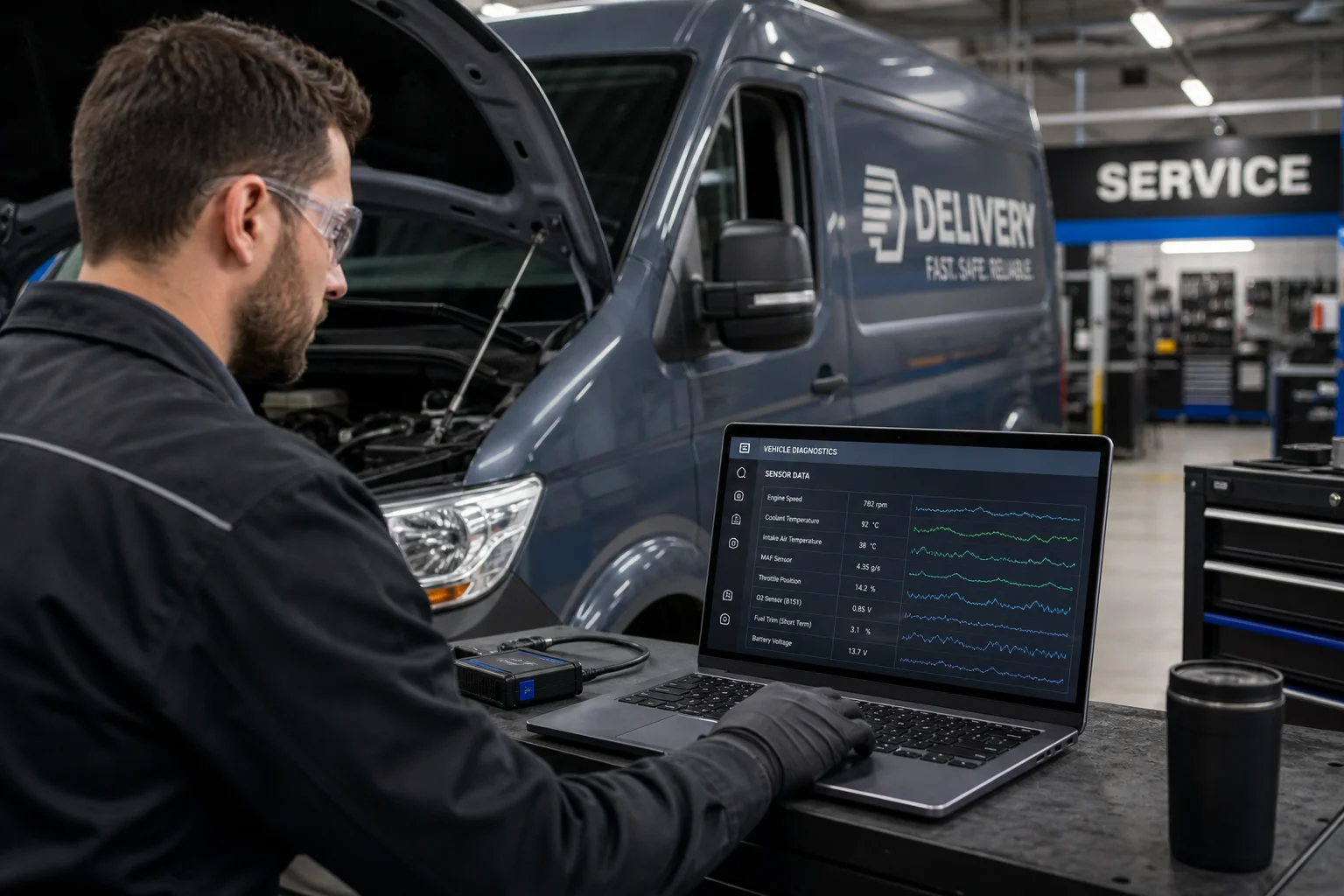
Educational guide to reading OBD fault codes, live data fields, and freeze-frame values for delivery vans operating on demanding urban routes.
Diagnostic data as reference, not a remote repair
On-board diagnostics store fault codes when a control module detects parameter values outside expected ranges. For fleet operators, the educational goal is to understand what a code description means in plain language and what additional context a shop needs before authorizing work.
A stored code indicates that a monitoring circuit reported an anomaly during a specific drive cycle. It does not, by itself, identify a failed part. Modules on fissipeditx.info walk through the difference between pending codes, stored codes, and readiness monitor status using neutral glossary entries.
Symptom documentation before scan interpretation
Educational workflows recommend documenting route observations before reading scan data:
- When symptoms appear: During acceleration from stops, at highway cruise, during idle between deliveries, or only on cold starts.
- Warning indicators: Which dashboard lights are active and whether they remain on during driving.
- Recent changes: Fuel grade, route assignment, trailer loading, or environmental conditions such as extreme heat.
- Maintenance history: Recent services, filter changes, or battery replacements that may affect sensor readings.
Live data and freeze-frame fields
Scan tools display live sensor values — engine speed, coolant temperature, fuel trim percentages, oxygen sensor readings — that change in real time. Freeze-frame records capture selected values at the moment a fault was detected. Educational modules explain how to read these fields alongside manufacturer specification tables.
Comparing live data to expected ranges helps coordinators formulate questions for technicians. If fuel trim values appear elevated consistently, the learning material describes what that term means without concluding which component requires replacement.
Common terminology in fleet diagnostic reports
Shop reports and telematics exports reuse technical terms. Neutral definitions reduce confusion during dispatch reviews:
- DTC: Diagnostic Trouble Code — alphanumeric identifier linked to a fault description in service databases.
- Pending code: Fault detected once; may clear if the condition does not repeat.
- Permanent code: Fault stored until cleared by a qualified procedure after repair verification.
- Readiness monitor: Self-test status indicating whether emission-related systems completed verification cycles.
- Freeze frame: Snapshot of operating conditions when a fault was logged.
Telematics and remote health reports
Some courier fleets receive automated diagnostic summaries from onboard telematics. Educational content describes how these reports aggregate codes and sensor trends. Remote alerts serve as prompts for human review — coordinators should verify whether a code persists, whether symptoms match, and whether the vehicle is safe to dispatch.
Artificial intelligence layers in telematics platforms may cluster codes by subsystem or suggest historical patterns across the fleet. Our modules clarify that such clustering is an information organization tool. Authorization for shop entry remains a separate operational decision.
Financial document vocabulary in diagnostic context
Fleet cost reports sometimes attach diagnostic codes to line items for authorization tracking. Terms like 'diagnostic fee' or 'scan labor' appear in shop invoices. Educational materials define these fields neutrally as documentation categories used in maintenance budgeting — not as indicators of repair scope or final cost.
Limitations of educational diagnostic content
Materials on fissipeditx.info do not perform live scans, clear codes, or approve repairs. They teach reading formats and question framing. Safety-critical symptoms — loss of power on highways, overheating warnings, fuel odor — require immediate professional evaluation regardless of code status.
Summary
Powertrain scan education for courier fleets emphasizes symptom documentation, glossary literacy, and structured questions for licensed technicians. Live data, freeze frames, and telematics summaries are reference inputs within a broader inspection process that remains the responsibility of qualified shop personnel.