Reference article
Rolling Stock Evaluation: Tire Logs and Tread Documentation for Courier Routes
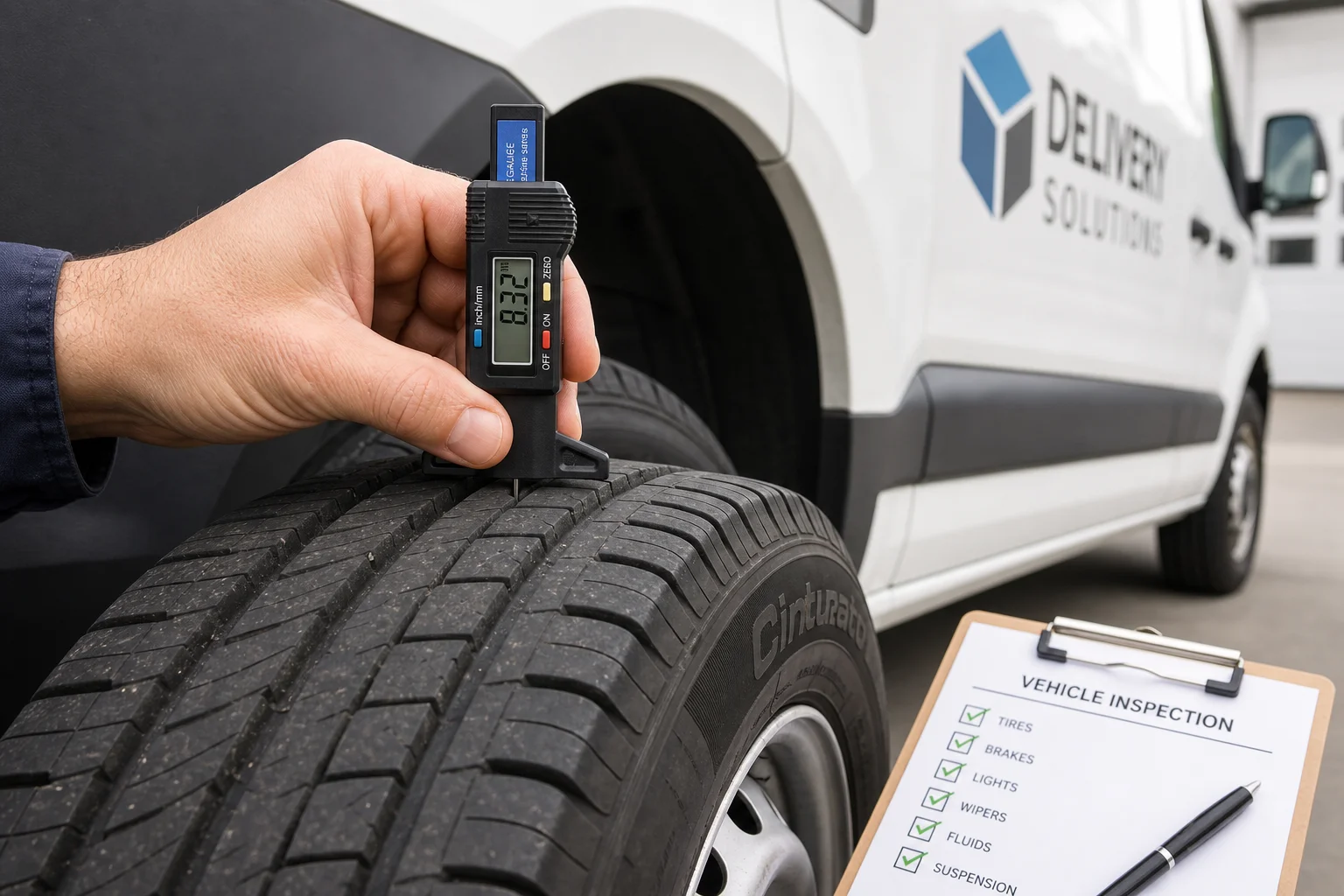
Educational overview of tire inspection checklists, tread depth recording, pressure logs, and rotation documentation for high-utilization delivery vehicles.
Why tire documentation matters in dispatch planning
Tires connect vehicle load, road surface, and braking performance. Courier fleets accumulate curb impacts, frequent turning, and loaded cargo that affect wear patterns. Educational modules teach how to read tire logs as continuity tools between drivers, coordinators, and tire service providers.
A tire log is not a pass-fail certificate. It records measurements and observations at a point in time. Subsequent routes, pressure changes, or damage events may alter conditions before the next entry.
Standard checklist fields explained
Fleet inspection forms commonly include the following neutral field definitions:
- Tread depth: Remaining groove depth measured at inner, center, and outer points; often recorded in 32nds of an inch.
- Inflation pressure: Cold pressure reading compared to door-jamb specification or fleet policy.
- Sidewall condition: Notes on cuts, bulges, cracking, or curb scuffing visible during walk-around.
- Rotation history: Date and odometer of last rotation; pattern used (front-to-back, cross, etc.).
- Load rating verification: Confirmation that tire size and load index match vehicle specification.
Urban route wear patterns
Educational content describes how inner-edge wear may relate to alignment or frequent turning, center wear to over-inflation, and outer-edge wear to under-inflation or cornering loads. These patterns are teaching examples for reading shop comments — not conclusions to apply without measurement.
Seasonal temperature swings affect pressure readings. Modules explain why cold-morning checks differ from afternoon values and why consistent measurement conditions improve log comparability.
Spare tire and repair kit documentation
Delivery vans may carry compact spares or inflation kits. Fleet logs should note spare condition and kit expiration dates where applicable. Educational materials list typical fields without prescribing replacement intervals — manufacturer and tire vendor documents remain primary references.
Artificial intelligence in tread image analysis
Some fleet tools offer camera-based tread estimation using computer vision. Learning modules explain that such tools produce preliminary readings for human verification. AI-generated tread estimates may misread lighting, debris, or irregular wear; physical gauge measurement remains the reference method in professional inspection.
Financial planning vocabulary for tire cycles
Fleet budgets may track 'tire cycle cost per mile' as a documentation metric describing how expenses are categorized across reporting periods. Educational content defines the term as a planning label used in spreadsheets — not a performance indicator or operational target.
Summary
Tire inspection education for courier fleets focuses on log formats, tread and pressure vocabulary, and route-related wear context. Proper documentation supports dispatch decisions and shop dialogue while leaving replacement authorization to qualified evaluation.